
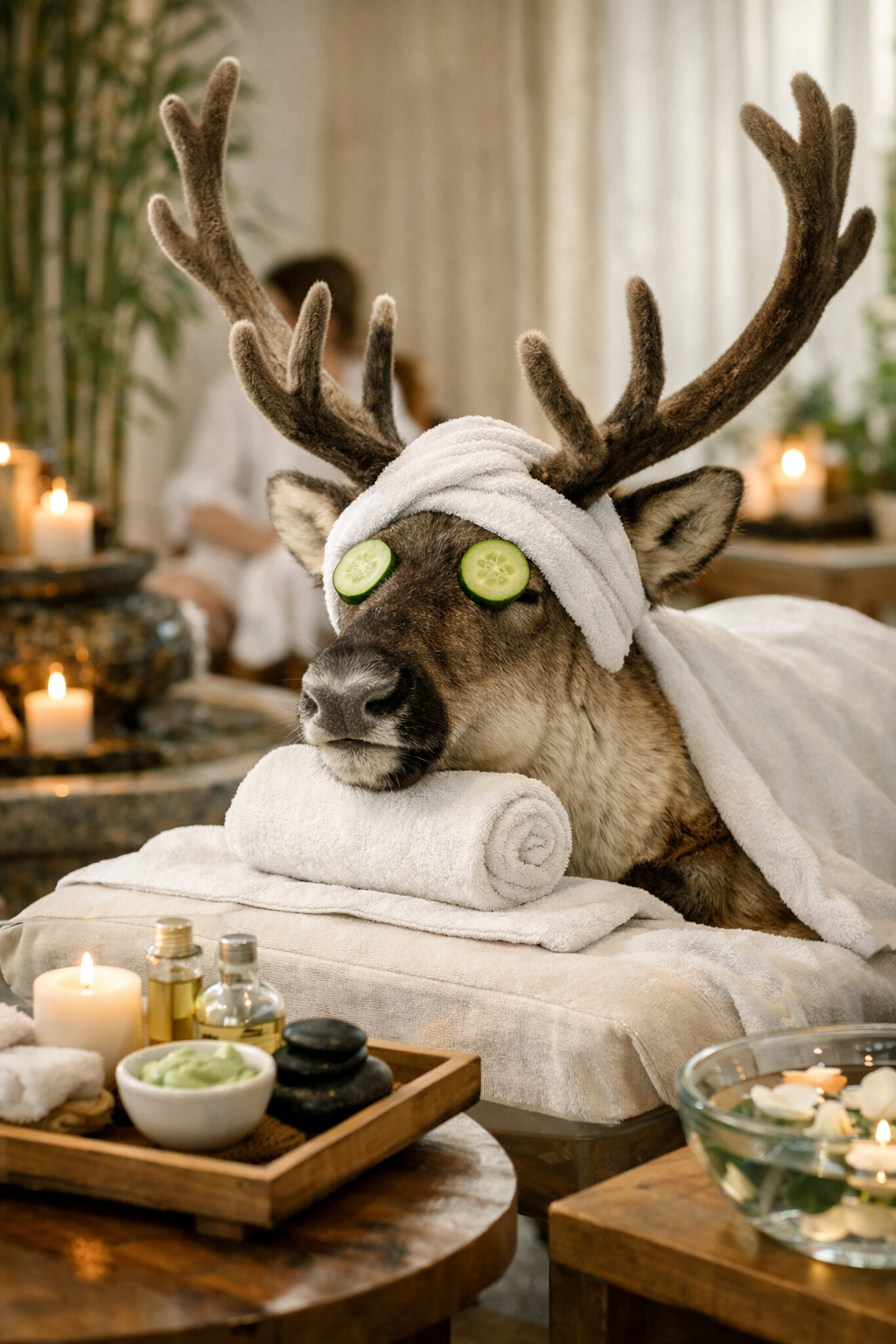
All of the post-Christmas cleanup and debriefing was finally done, and Santa was treating his reindeer to a day at the spa. It was a full day of sauna, massage, herbal wraps, and hoof polishing. The spa even offered a full bath if anyone was interested. The reindeer weren’t too sure about the idea. They were alpha-male athletes and didn’t want anyone to get the idea that they were pampered princes.
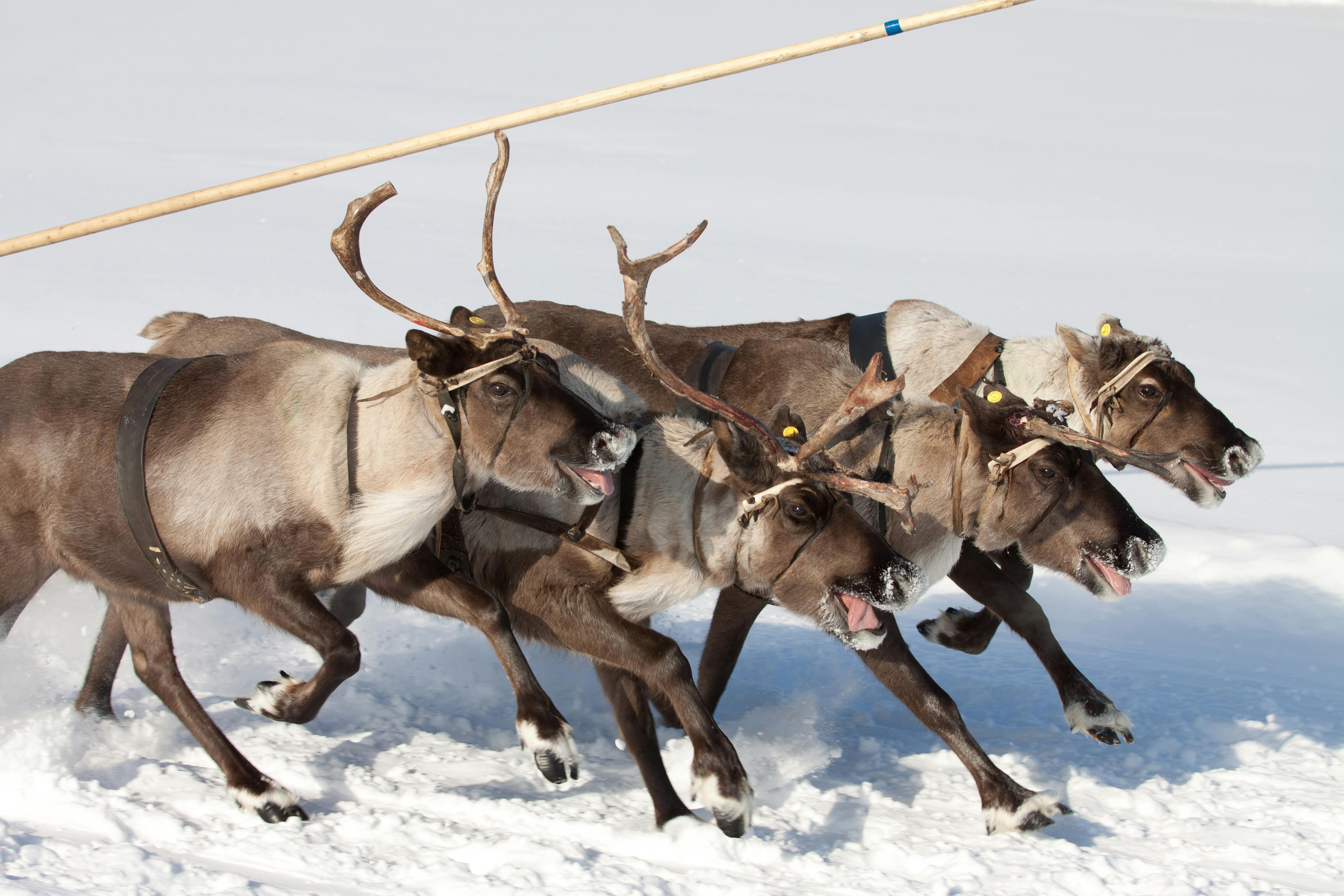
Santa: I booked you all for a day tomorrow at Glinda’s Sauna and Day Spa. Is everyone coming?
Dasher: I don’t know, boss. We’re hard-working pack animals. I’m not sure spas fit with the image.
Comet: What if some kid sees us dripping with seaweed?
Santa: It’s the North Pole. No children live up here.
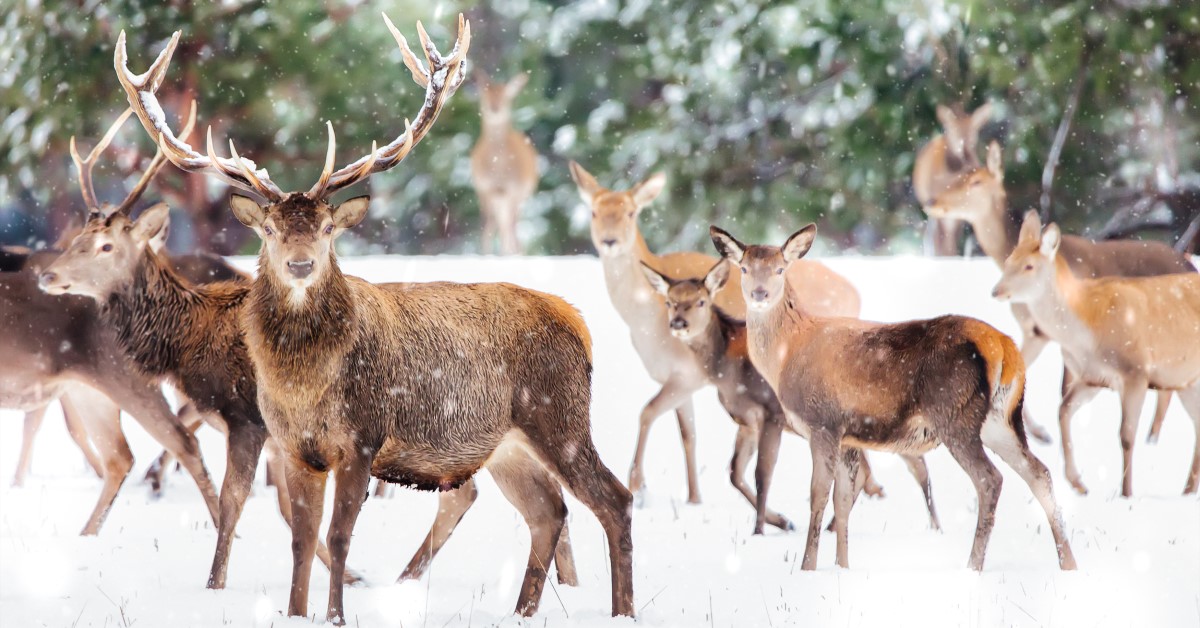
Blitzen: I think it sounds great. We do a really stressful job. We deserve to relax.
The next day, everyone arrive at 9 am.
Glinda: Hello, boys. Welcome to Glinda’s. We have a special day planned for you: sauna, deep muscle massage, seaweed wrap, more sauna, and a quick roll in the snow.
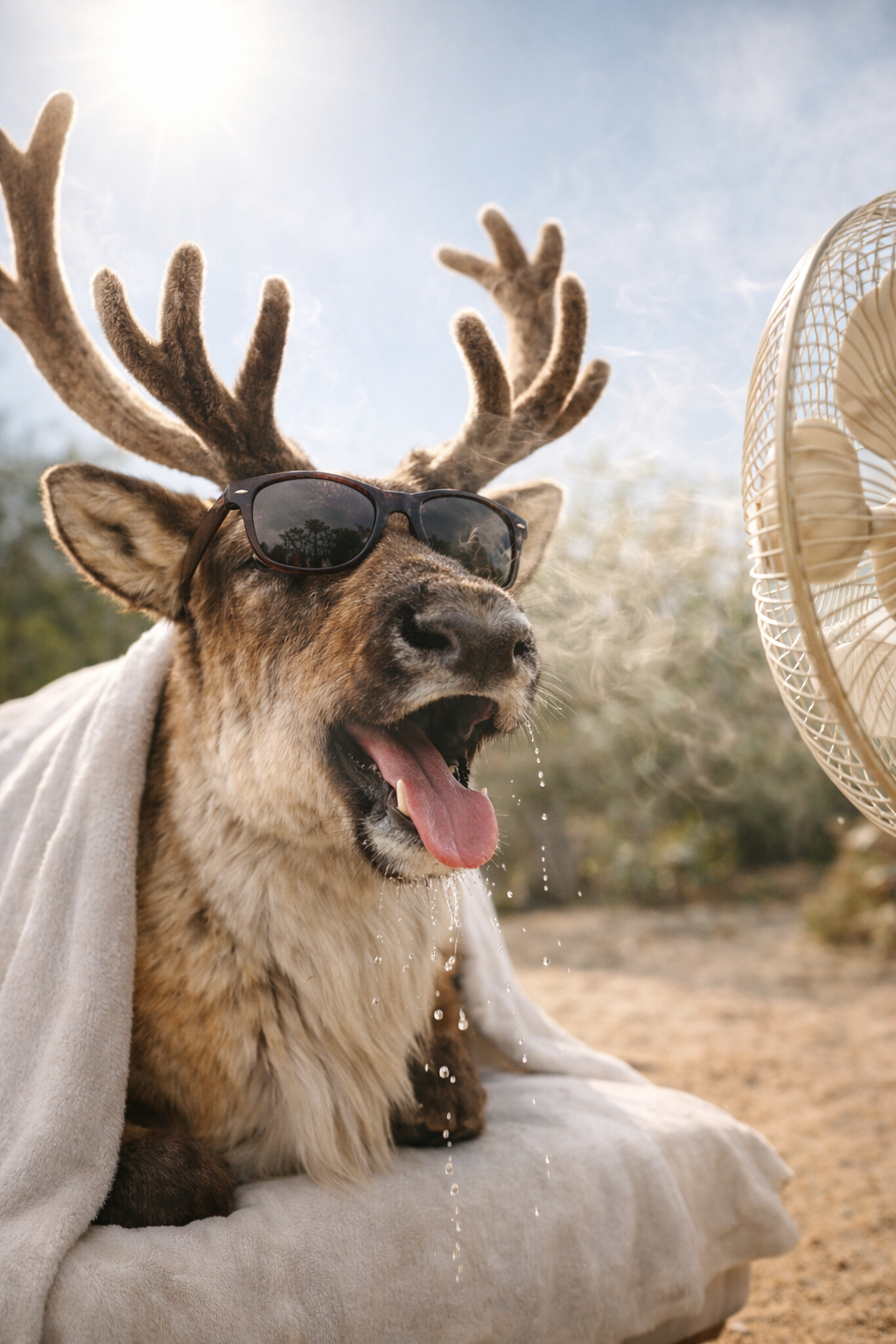
Donner: I think I’ll skip the sauna. I have a lot of fur.
The other reindeer nodded. They didn’t want to ruin the day by passing out in the heat.
Glinda: I hadn’t really thought about the fur. The elves love it. And we occasionally get humans who like it too. Let’s get you ready for your massage.
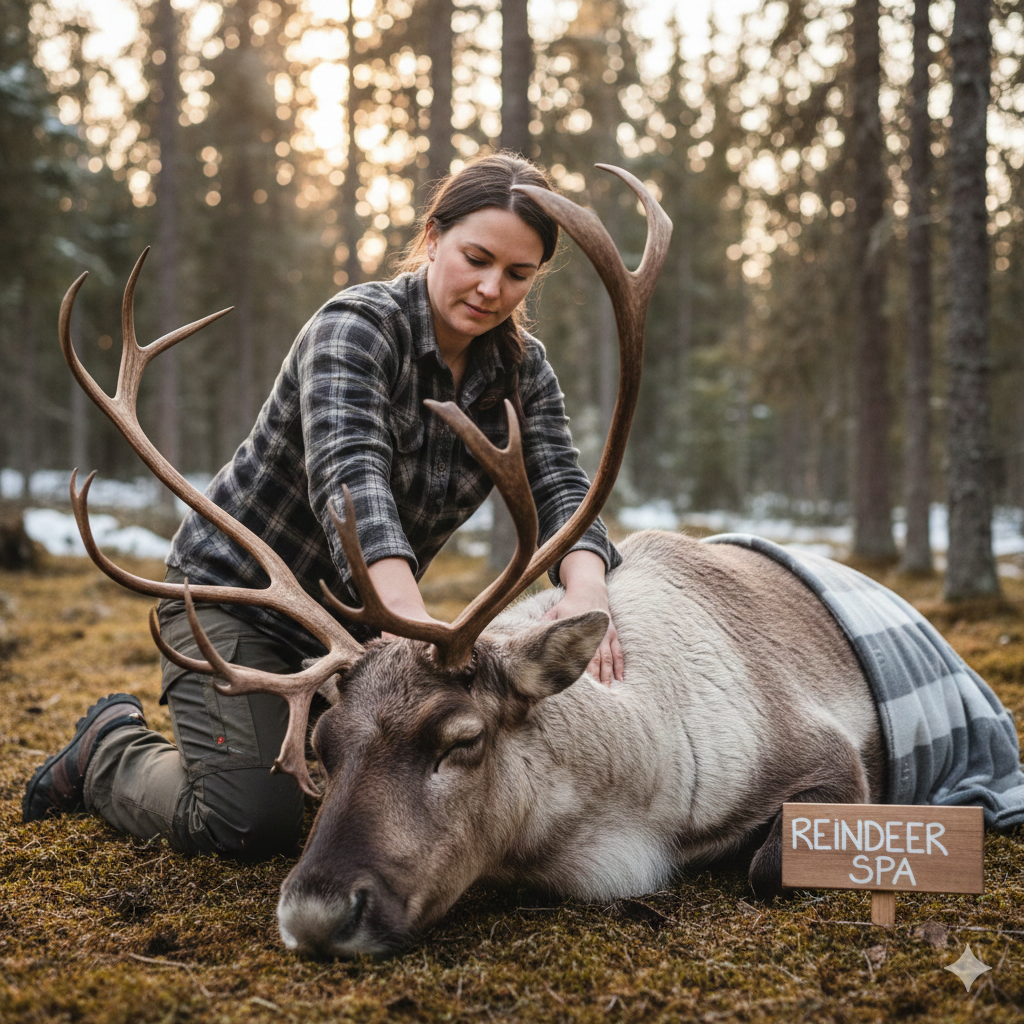
She led them to a room with a row of tables. Each reindeer laid on a table and closed his eyes. They heard soft music and felt strong hands massaging their backs.
Vixen: Do you guys hear anything?
Dancer: Yes, silly. They’re playing music.

Vixen: No. Like someone moving around.
Dancer: Of course someone’s moving around. We’re getting massages. Just close your eyes and relax.
Vixen: I guess. Maybe I need this more than I thought.
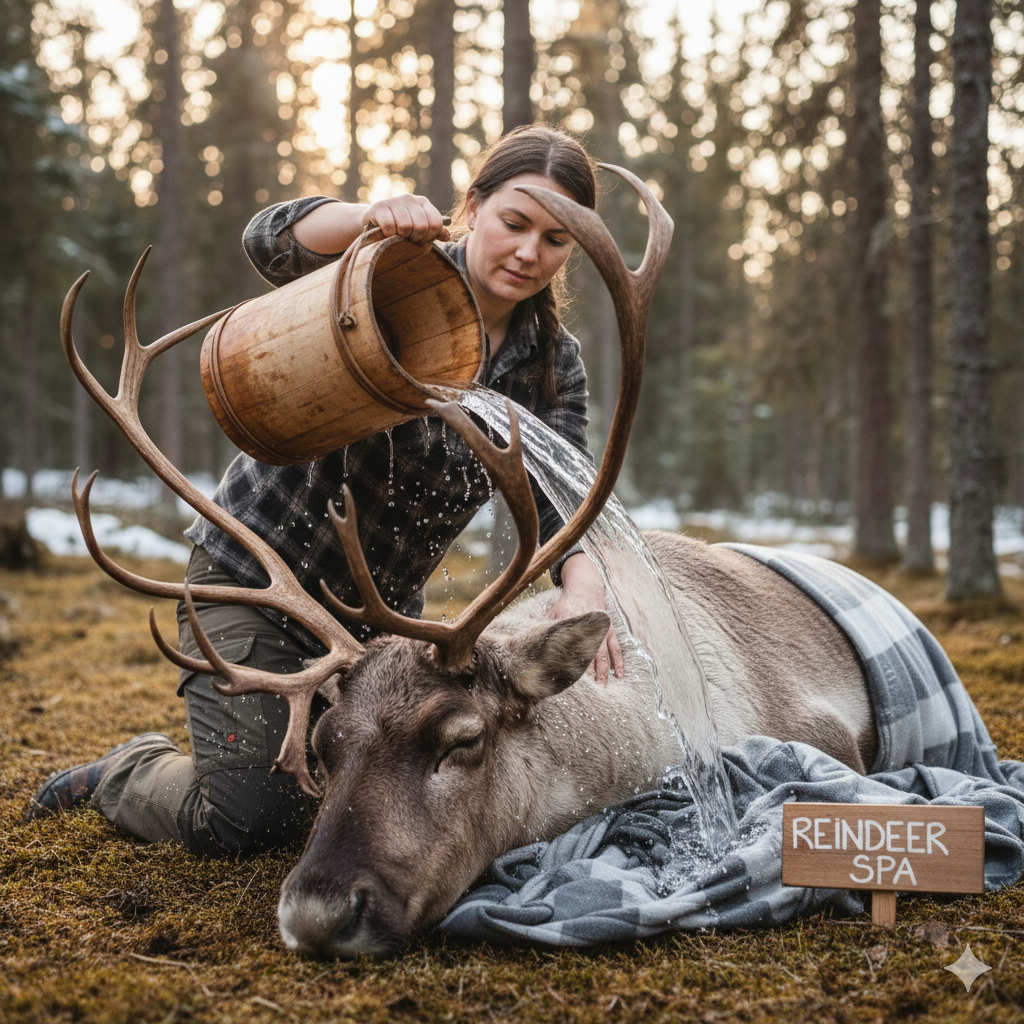
The reindeer were feeling very relaxed.
Glinda: Okay, everyone. Time for a quick shower before your seaweed wrap.
Prancer: What’s a shower?
Comet: It’s like a bath, but they dump water on you.
Prancer: That sounds extremely unpleasant. I think I’ll skip that.

Glinda: It’s warm water that comes out of a spray. It’s not like having cold water dumped on you.
Surprisingly, the reindeer all enjoyed the shower.
Glinda: Shake off the excess water and follow me. It’s time for your wraps. Because of the fur, we’re going to use mud and warm towels. You’re going to relax for 45 minutes. Your fur will look amazing.
She led them back to the tables where each reindeer was covered in mud and then wrapped up.They closed their eyes and felt something being gently massaged into their faces.
Blitzen: I was right. This is wonderful.
Dasher: It is rather pleasant.
Vixen: Can you hear it this time?

Donner: What are you talking about?
Vixen: I think there’s someone in here with us.
Comet: There’s a lot of folks in here.
Vixen: No. someone who isn’t with the staff or with us.

Cupid: Just relax and enjoy the feeling.
Vixen: I guess. It just feels weird.
Glinda: Time to unwrap. Let’s see how you look. How do you feel?
Blitzen: I feel great, but I need to get the mud out of my fur.

Glinda pointed to toward the door, and the reindeer went out and rolled in the snow.
Comet: My fur is so soft.
Prancer: And you look better too.
Glinda: Everyone back into the hoof salon. Time for trimming and buffing.
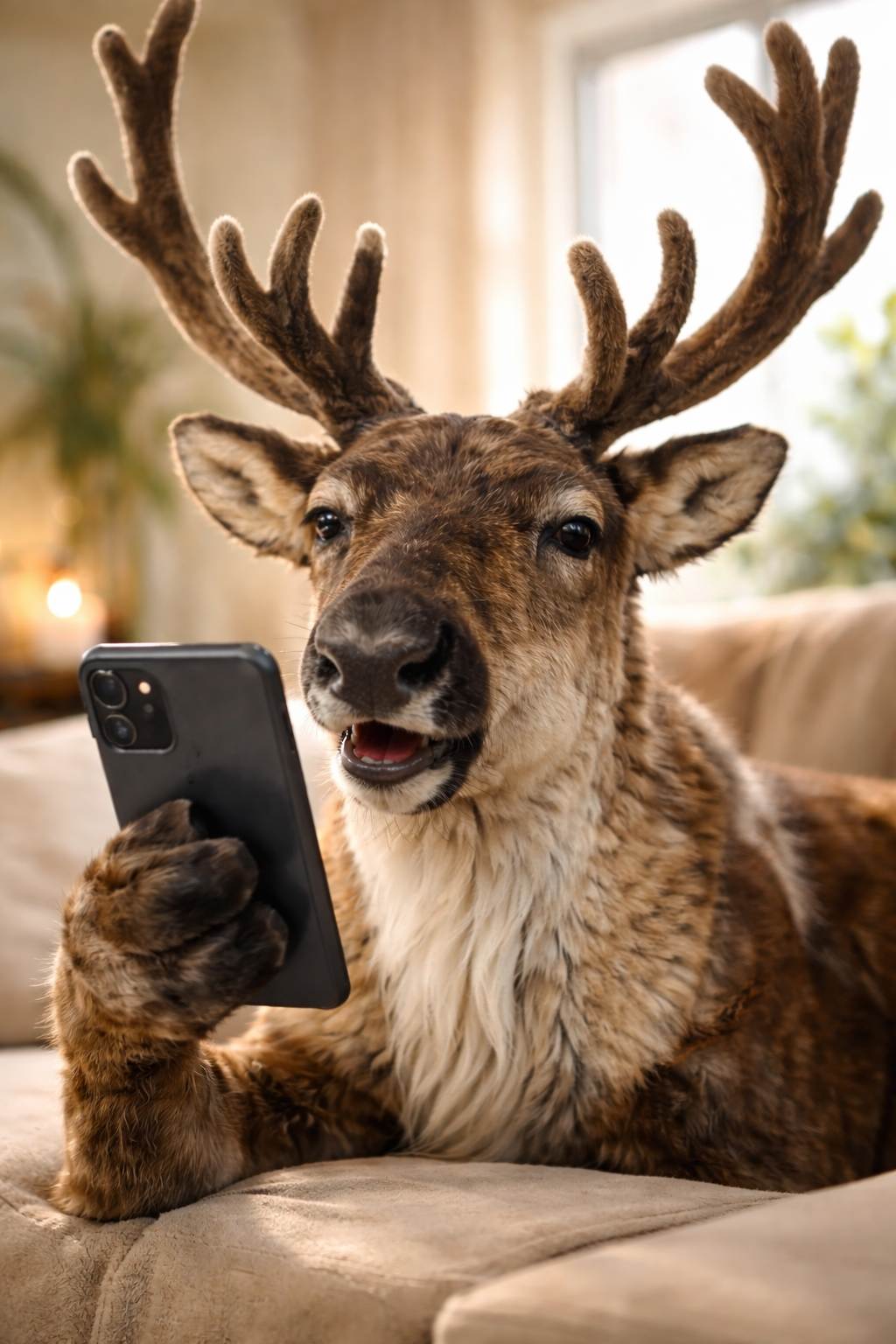
Soon the reindeer were finished and walked home. Their muscles were relaxed, their fur was silky, and their hooves were trimmed. It had been a good day. That night, Dancer looked at the news. The top story was Exclusive:How Santa’s Reindeer Relax. It was full of pictures of the reindeer with Glinda. Vixen was right: someone had gotten in and taken a lot of pictures.
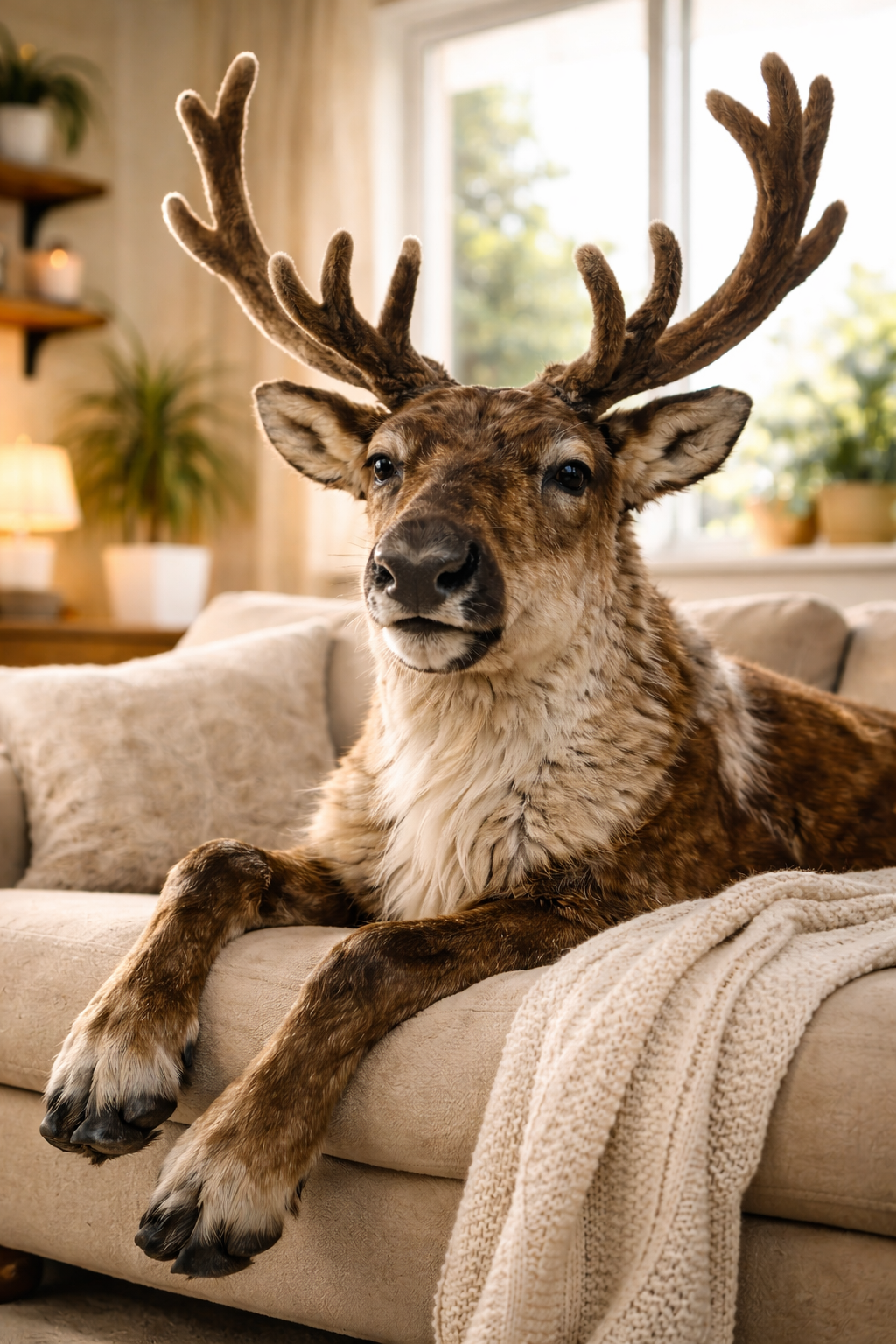
Pictures courtesy of Google Images and AI








 Adventures in Cheeseland