

Editor’s Note: October is Domestic Violence Awareness Month in the US. We’re taking a break from our usual (hopefully) humorous topics and looking at an issue that has hit our household. If this topic is too painful for you, please take a break this week and come back next Saturday.

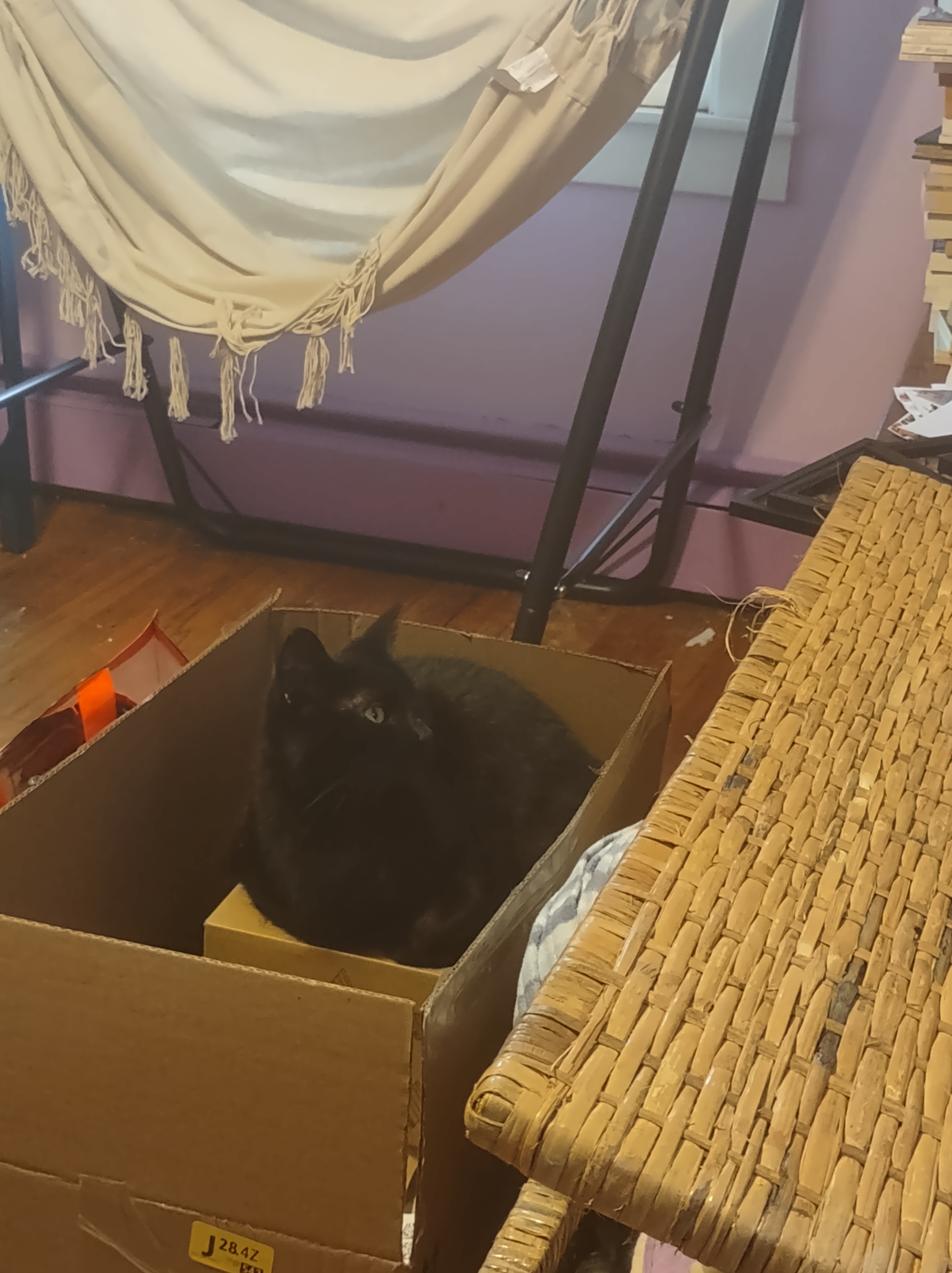
Hello! It’s Onyx here. October is Domestic Violence Awareness month. About a year ago, my human, along with Angel, Gypsy, and myself, had to escape a domestic violence situation involving my human’s former husband (I’ll call him loud human). He was really nice when I first moved in, but as time went on, he became loud, mean, controlling, and eventually, abusive, both physically, emotionally, and verbally. He was mean to everyone in the house, including the mini humans, and the cats. So I’m writing today to bring awareness to domestic violence involving pets.

- 71% of domestic violence survivors report that their abuser threatened, harmed, or killed a pet. The abusers will do this as a way to control or get revenge on their victims. Animals may also be used as weapons against the victims.
- Half of domestic violence victims would rather stay with their abuser than leave their pets. Thankfully, my human was in a situation where she could keep me (and Angel and Gypsy. Loud Human got Thunder, as she was his cat). She was able to move us all in with her mom. But it’s so sad to know that this is a choice that must be made by victims every day.

- 52% of survivors are forced to leave their pet with their abuser. Because of this, 25% of victims will return to their abuser; oftentimes, their abuser will use the pet as a means to get their victims back.
- 87% of battery perpetrated pet abuse is committed in front of the abuser’s partner; 76% is committed in front of children.
- 13% of animal abuse involves domestic abuse.

- 85% of domestic violence shelter workers report that they commonly encounter clients who speak about pet abuse; people in shelters are 11 times more likely to report pet abuse than people who are not abused.
- Pet abuse investigations are often starting points for social services getting involved in domestic violence situations.
- Domestic violence survivors who reported pet abuse also reported twice as many child abuse cases, as compared to survivors who did not report pet abuse.

- Animal abusers are more likely to be domestic violence perpetrators; additionally, these abusers are more likely to have been arrested for other violent crimes, have a history of delinquent behaviors, and often have a history of suffering abuse in their childhood.
- 55% of domestic violence survivors report that their pets are very important emotional support structures in their lives.
- 19.5% of victims without pets will postpone seeking shelter, whereas 33.3% of victims with pets will postpone seeking shelter.

- 65% of domestic violence survivors worry about what will happen to their pet upon entering a shelter; because of this, 40% of victims don’t leave their violent situation due to their pet.
- Only 12% of domestic violence shelters can take in pets, and only 24% of shelters can provide referrals for local animal welfare houses. Because of this, survivors have lived in their car for up to 4 months, waiting for a spot at a pet friendly shelter to open up.

That’s a lot to swallow. There are tips on getting your pet ready to leave a domestic violence situation. These tips include:
- Know what shelters around you allow pets, or at least have an established safe haven foster care program. Check out this website for statewide information on where you and your pet may be able to go: https://www.safehavensforpets.org/
- If taking your pet is not possible, try to arrange for your pet to stay with your vet, a local shelter, or a friend or family member. Try to avoid leaving your pet alone with your abuser.
- Create a safety or escape plan that includes your pet.
- If you do have to leave your pet with your abuser, and are able to go back for them, ask a police officer or member of animal control to escort you. Never go alone.

- Put vaccines and registrations in your name; if at all possible, leave your abuser’s name off of them.
- Prepare your pet for a quick escape; have all of their pertinent documents (including vet records, vaccination records, registrations, and microchip information) in one place.

- After you leave your abuser, there are still some steps you can take to protect your pet. These include:
- Not leaving your pet alone outside.
- Changing your vet.
- Bring as much food and medicine as possible for your pet when you leave (and favorite blanket or toy, if applicable).
- See if you can include your pet on any legal protection orders you may get. 30 states, including my state of Michigan, allow pets to be included.

Although resources vary from state to state, I found some national organizations (in the US) that may help your human and you in domestic violence situations. These organizations include the ASPCA ((888) 666-2279), The National Coalition Against Domestic Violence (800-799 SAFE (3233)), American Humane Association (1-800-227-4645), Purina (972.487.2200), and Safe People Safe Pets (617-999-3055).

Domestic violence is atrocious for everyone involved. And it’s infinitely more difficult to escape when you have a pet. My paws are crossed that one day, domestic violence will no longer be an issue. However, for now, if you or someone you know is in need of resources, please try to access them as conveniently as possible. Stay safe, and have a safe and happy October (which is also Black Cat Awareness Month!)













 Adventures in Cheeseland